Seminar Introduction
Kanayama Seminar Theme: "Considering the Ideal Approach to Community-Based Childcare Support and Practice"
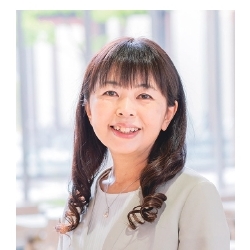
Professor Miwako Kanayama
The seminar's theme is "Community-Based Childcare Support." We aim to understand the realities of the modern childcare environment, develop a philosophy for supporting parents and children, and consider practical ways to provide concrete support. We visit childcare support sites such as nurseries and childcare support centers, listen directly to supporters and parents, experience support settings firsthand, and implement support that we ourselves have planned and developed, in order to research the types of support that families raising children need. A unique learning experience at our university is the opportunity to practice childcare support for local parents and children in the university's "plaza," and to directly learn about child development and parent-child relationships. We also have opportunities for practical application in collaboration with local governments. For example, students planned and implemented the "Baby & Mom Chat Session," a collaborative project with Nagano City, and the "Water Play with Everyday Materials" childcare class at the Iizuna Town Childcare Support Center. This year, students are planning an "Online Childcare Seminar" to think about childcare together with parents, and a "Dad & Child Plaza" to support fathers. Exchanging ideas, experimenting, and collaborating with peers in seminars will lead to practical skills as a childcare provider that supports children's development and empathizes with the feelings of parents.
Shirasawa Seminar Theme: "Thinking about expression and childcare centered on each individual's 'body'"
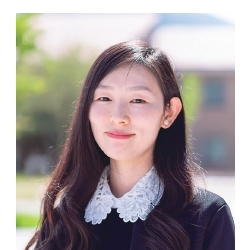
Associate Professor Mai Shirasawa
Each of us is born and lives with a unique body. My specialization is in the study of dance art and dance education. I have researched Trisha Brown, a New York dancer, choreographer, and one of the founders of the postmodern dance movement. I learned from her that everyday movements can become art, and my practice, based on the theory that the mere existence of people is expression, and that we live by jointly creating and building meaning and value, also connects to childcare.
Children express their feelings not only through words but also through their whole bodies. Therefore, caregivers can only truly understand a child's feelings by reading non-verbal cues from their facial expressions, gestures, and movements, and by mimicking their movements, looking at things from their perspective, and facing the same objects. This kind of interaction with children is a crucial role for caregivers. Based on this understanding, we are working with students to consider how to interpret children's expressions in childcare and what the caregiver's physical state should be like. The students in the seminar are conducting research from their own unique perspectives, such as "ways to respond that bring a sense of security during expressive activities" and "relaxation methods to reduce stress for caregivers."
Children express their feelings not only through words but also through their whole bodies. Therefore, caregivers can only truly understand a child's feelings by reading non-verbal cues from their facial expressions, gestures, and movements, and by mimicking their movements, looking at things from their perspective, and facing the same objects. This kind of interaction with children is a crucial role for caregivers. Based on this understanding, we are working with students to consider how to interpret children's expressions in childcare and what the caregiver's physical state should be like. The students in the seminar are conducting research from their own unique perspectives, such as "ways to respond that bring a sense of security during expressive activities" and "relaxation methods to reduce stress for caregivers."
Student Interview (Kanayama Seminar)
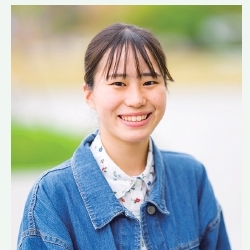
3 years (at the time of the interview)
Suzuka Kobayashi
Considering the ideal approach to community-based childcare support and practices.
I was interested in various things, such as the work of a childcare worker and the role of supporting child-rearing, and I was struggling to figure out what I was most interested in for the future. At that time, during my internship at a parent-child class, there were about three families where the fathers were participating alongside the mothers. Seeing how enthusiastically the fathers were involved, I decided to investigate fathers' participation in childcare, generational differences, and child-rearing support, and I knocked on the door of Professor Kanayama's seminar, which specializes in child-rearing support. There, I am exploring ways to be involved in child-rearing support from a wide range of perspectives, including that of a childcare worker. Currently, I am preparing surveys to investigate generational attitudes and want to gain a deeper understanding of attitudes towards paternity leave, such as the difficulty fathers face in taking it. In the university seminar, there are also people who are interested in sick child care and work related to child-rearing from an administrative standpoint. I feel stimulated by exchanging opinions with peers who aim for the same ideals and learning about ways of thinking that I had never considered before, and I feel that we are learning together every day in a fun way.
I was interested in various things, such as the work of a childcare worker and the role of supporting child-rearing, and I was struggling to figure out what I was most interested in for the future. At that time, during my internship at a parent-child class, there were about three families where the fathers were participating alongside the mothers. Seeing how enthusiastically the fathers were involved, I decided to investigate fathers' participation in childcare, generational differences, and child-rearing support, and I knocked on the door of Professor Kanayama's seminar, which specializes in child-rearing support. There, I am exploring ways to be involved in child-rearing support from a wide range of perspectives, including that of a childcare worker. Currently, I am preparing surveys to investigate generational attitudes and want to gain a deeper understanding of attitudes towards paternity leave, such as the difficulty fathers face in taking it. In the university seminar, there are also people who are interested in sick child care and work related to child-rearing from an administrative standpoint. I feel stimulated by exchanging opinions with peers who aim for the same ideals and learning about ways of thinking that I had never considered before, and I feel that we are learning together every day in a fun way.