Faculty of Global Management Studies
Dean's Message
Intellectual curiosity is the starting point and driving force for creating your own added value.
Faculty of Global Management Studies
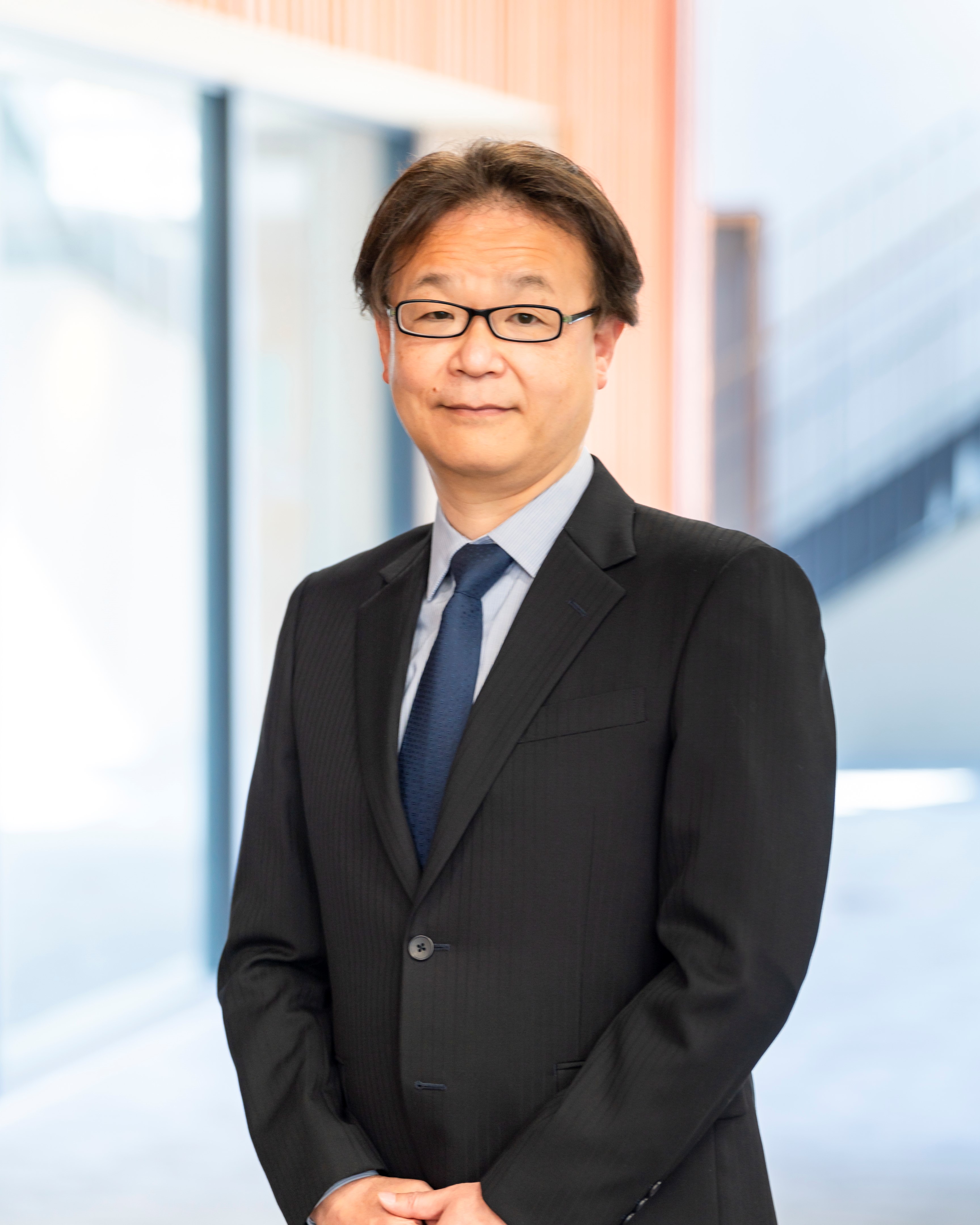
Professor Teizo Anayama
In Faculty of Global Management Studies, you will learn how to manage various value creation processes with a global perspective.
While the core of the "management" approach lies in the study of business administration, a unique feature of this faculty is that students can study a wide range of specialized subjects, including law, economics, administration, politics, regional studies, and innovation, in an interdisciplinary manner according to their own concerns and interests. By formulating their own questions, implementing the PDCA cycle, and exploring answers, students aim to create added value.
It's okay if you haven't yet figured out what you want to do or what path you want to take in the future. This faculty offers a broad, interdisciplinary learning experience, so you're sure to see a future where you can thrive. If you already know who you want to become, you can take sure steps towards achieving that goal. Let's cherish our curiosity and deepen our learning together.
While the core of the "management" approach lies in the study of business administration, a unique feature of this faculty is that students can study a wide range of specialized subjects, including law, economics, administration, politics, regional studies, and innovation, in an interdisciplinary manner according to their own concerns and interests. By formulating their own questions, implementing the PDCA cycle, and exploring answers, students aim to create added value.
It's okay if you haven't yet figured out what you want to do or what path you want to take in the future. This faculty offers a broad, interdisciplinary learning experience, so you're sure to see a future where you can thrive. If you already know who you want to become, you can take sure steps towards achieving that goal. Let's cherish our curiosity and deepen our learning together.
3 courses
We are offering completely new classes that add a global perspective to business management.
We have a large number of faculty members with specialized fields, and offer a learning experience that is rare even among the many national and public universities in Japan.
At our faculty, students hone their global education and communication skills, and acquire leadership and logical thinking skills. Their first year is shared across all faculties, while from their second year onwards they are divided into three courses, where they pursue specialized and interdisciplinary studies, including business administration. Building on the diverse values and ways of looking at things (perspectives, viewpoints, perspectives, etc.) they develop through these courses, they will develop the ability to solve the diverse challenges facing society for the future and drive the process towards creating new added value.
We have a large number of faculty members with specialized fields, and offer a learning experience that is rare even among the many national and public universities in Japan.
At our faculty, students hone their global education and communication skills, and acquire leadership and logical thinking skills. Their first year is shared across all faculties, while from their second year onwards they are divided into three courses, where they pursue specialized and interdisciplinary studies, including business administration. Building on the diverse values and ways of looking at things (perspectives, viewpoints, perspectives, etc.) they develop through these courses, they will develop the ability to solve the diverse challenges facing society for the future and drive the process towards creating new added value.
Developing individuals who can demonstrate management and practical skills within corporate organizations.
Students will acquire knowledge of business management, including business administration, economics, accounting, and law, and develop the management and practical skills necessary to drive organizations and bring about change with a "global perspective" that is essential in modern business. A global perspective that extends beyond Japan, and flexible thinking that looks to the future rather than relying solely on past experiences, will pave the way for a new future not only for Nagano Prefecture but for Japan as a whole.
<Desired Career Path>
- manufacturing industry
- Service industry
- Retail
- Infrastructure (transportation and electricity)
- Information and Communications Industry
- financial industry
- Trading companies, etc.

Developing individuals who will start their own businesses or take over existing ones.
This program aims to cultivate knowledge about entrepreneurship, business succession, and second-time entrepreneurship, fostering the conceptual and practical skills, as well as an entrepreneurial mindset, to launch new businesses that address social and regional challenges, fostering a broad perspective and flexible thinking. The key is understanding "what philosophy guides your business." We will explore management practices that benefit society.
<Desired Career Path>
- Starting a business
- Business succession and second-time entrepreneurship
- Consulting firm
- Launching new businesses in private companies, etc.

To cultivate human resources who will be involved in community management in government and public organizations.
This program aims to cultivate new leaders with a global perspective, essential for local governments and industries striving for regional revitalization. It fosters broad learning and problem-solving skills, providing knowledge of public management, including administrative organizations and local government systems, and developing planning and practical skills to address regional challenges. Graduates find employment in government agencies such as national, prefectural, and municipal governments, as well as public organizations and highly public-spirited private companies.
<Desired Career Path>
- Government agencies
- public organizations
- NPOs, etc.

STUDENT'S VOICE
I want to become someone who can make suggestions that will be helpful to others.
01. What are the attractions of The University of Nagano?
The reason I chose The University of Nagano is, While learning about the global perspective that will be necessary in future society, I want to explore what I can do for my local community and find what I truly want to do. That's what I thought.During high school, I couldn't really figure out what I wanted to do, and I could only vaguely decide on something related to business or studying finance. I also had a desire to understand how the world works. Therefore, I thought I would go to university and explore my career path while studying. The University of Nagano is You choose your course in your second year, but the appealing aspect is that you can also take classes from other courses. I felt that way. Also, I think the opportunity to make lifelong friends through dormitory life and to go abroad while still a student are major attractions.
02. What are some interesting classes and subjects you enjoy learning?
Since I wasn't able to clearly figure out what I wanted to do during my first year, I chose the Global Business course in my second year, which allowed me to try various classes that matched my interests.While I took a wide range of courses including business administration and accounting, I focused my third-year courses on business-related legal systems, which I had been interested in since my first year, and on finance-related courses, which I found particularly impressive among the required elective courses I took in my second year. Of these, "Financial Systems Theory" was especially interesting. There was no textbook; the course content was determined based on research papers. It took me a considerable amount of time to understand the lectures and be able to explain them myself. The lesson involved using algebraic expressions to explore the role of banks, something I had wondered about for a long time, which helped deepen my understanding of the financial industry.

Global Business Course 4 years
Nao Matsushita
(At the time of the interview)
List of Specialized Seminars
| No. | Teacher | Seminar I theme |
Seminars II and III and Graduation Research theme |
| 1 | Anayama Teizo | Industry, Market, and Company Analysis | Industry, Market, and Company Analysis |
| 2 | Azuma Toshiyuki | Analyzing business activities from an organizational theory perspective | Analysis and research on management organizations |
| 3 | Ito Hajime | Develop accounting literacy | Develop accounting literacy |
| 4 | Ohmuro Nobuyoshi | Innovation | Social innovation |
| 5 | Kinugawa Shuhei | Management from an accounting and financial perspective | Management based on accounting and finance |
| 6 | Kim Hyonson | Introduction to Business Law | Research on Business Law |
| 7 | Syuu Muen | Welcome to a world without "right answers." | Behavioral Economics, Episode 0 |
| 8 | Shuto Soichiro | Business Model Research | The theory and practice of business strategy |
| 9 | Tamura Shigeru | ― | Local autonomy & regional revitalization |
| 10 | Tsukiyama Hideo | Rethinking regional revitalization | Building Sustainable Communities |
| 11 | Naito Akira | Entering the world of public law trials | From the world of public law |
| 12 | Nagata Kunikazu | Study economics and finance | Financial theory, finance, economics |
| 13 | Nakamura Akito | The science of consumer psychology | The science of consumer psychology |
| 14 | Nakamura Toshihiko | Regional revitalization/regional revitalization policy | Policies and financial management for regional revitalization and development |
| 15 | Miura Masashi | Considering the challenges of local self-government | Considering the challenges of local self-government |
| 16 | Mikami Masatsugu | What constitutes good public policy?: Public administration × Policy studies × Evaluation studies | Global and International Public Administration and Policy Evaluation Theory |
| 17 | Miyashita Kiyoshi | ― | Learn about international regional management (strategy, organization, and human resources) |
| 18 | Yang Rakuka | Learn marketing strategies for the Asian market. | Learn the marketing strategies of hit products. |
We are currently streaming videos of our open campus faculty guidance sessions and mini-lectures on YouTube.
The dean and faculty members provide explanations and mini-lectures about Faculty of Global Management Studies in a way that is easy for high school students to understand, so please take a look.
We have also uploaded videos of other mini lectures, so please check out our YouTube channel.
In addition to open campus events, Yumenavi also offers many lecture videos on topics such as "Why we provide technology to rival companies for free" and "Solving regional issues and leadership."
Click here for The University of Nagano 's Dream Navi.
Click here for The University of Nagano 's Dream Navi.
- Teacher Relay Essay, Part 1: "Trust in Society and Accounting"
- Teacher Relay Essay, Part 2: "Inertia and Determination"
- Teacher Relay Essay, Part 3: "A Gift from the Trickster"
- Teacher Relay Essay, Part 4: "Student Trade Show"
- Faculty Relay Essay, Part 5: "The New University, the Old Vessel of Knowledge—A Guide to the Yamato Book Collection"
- Teacher Relay Essay, Part 6: "The Science of the Human Mind"
- Teacher Relay Essay, Part 7: "Reflections from the Field in Vietnam - Towards the World of International Marketing"
- Faculty Relay Essay - New Year's Edition by the Chairman of the Board - "To High School Students Interested in Our University"
- Faculty Relay Essay, Part 8: "Public Policy and Experts: 'Civilian Control' Based on Evaluation"
- Faculty Relay Essay #9: "What is Linguistics?"
- Teacher Relay Essay, 10th Installment: "What You See from the Train Window in Nagano"
- Teacher Relay Essay, 11th Installment: "The Language of Literature"
- Teacher Relay Essay #12: "English and Englishes"