Seminar Introduction
Nakazawa Seminar: Theme "Exploring the Food Abundance of Nagano Prefecture"
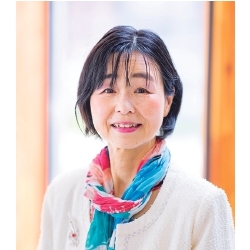
Professor Yako Nakazawa
Nagano Prefecture boasts a rich food culture. Beyond its local cuisine, the abundance of food-related materials left behind by the people of Nagano, such as the "History of Nagano Prefecture: Folklore Edition," is a great asset. We learn about its value not only through books, but also by actually creating traditional dishes that have been passed down through generations. It's also important to analyze and evaluate the Japanese food culture, which our ancestors have ingeniously preserved, from both a cultural and scientific perspective. I also run a food culture research circle, and I encourage interested students to participate from their first year, learning together through collaborative activities.
Nagano Prefecture offers many things to taste, places to visit, and fascinating people to meet. Through on-site research and hands-on farming experiences, students will learn about the depth of its food culture and the importance of diet. By deeply studying Nagano's cuisine, students will consider what treasures exist in their own region. Their perspectives will broaden, and they will turn to treasures in other parts of Japan, or even overseas. They will discover the wisdom and ingenuity left behind by people of the past, and the fascinating ways in which these traditions are cherished while adapting to modern life. In this way, the world of food expands.
Nagano Prefecture offers many things to taste, places to visit, and fascinating people to meet. Through on-site research and hands-on farming experiences, students will learn about the depth of its food culture and the importance of diet. By deeply studying Nagano's cuisine, students will consider what treasures exist in their own region. Their perspectives will broaden, and they will turn to treasures in other parts of Japan, or even overseas. They will discover the wisdom and ingenuity left behind by people of the past, and the fascinating ways in which these traditions are cherished while adapting to modern life. In this way, the world of food expands.
Shirakami Seminar Theme: "Scientifically Investigating Nutrient Absorption and Transport Carriers in the Intestinal Tract"
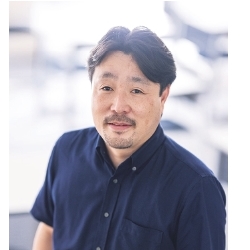
Toshiyuki Shirakami, Associate Professor
In the seminar I lead, we begin with an introduction to experiments and research, how to read and interpret research papers, and then move on to the molecular mechanisms of nutrient digestion and absorption, particularly the introduction of molecular nutrition and clinical nutritional evidence regarding the transporters of peptides and amino acids in the small intestine. We then engage in discussions. Students are required to express their own thoughts and questions.
For my graduation research, I am conducting basic research on regulating nutrient transporters in the intestinal epithelium and controlling nutrient absorption by food-derived components, with a view to disease prevention and improvement. While the focus of my research is on nutrient absorption and transporters in the intestinal tract, I also aim to use agricultural products unique to Nagano Prefecture to disseminate information on health and nutrition.
Through seminars, I hope that students will develop the ability to think for themselves, express their own opinions, discuss and coordinate with others, and take initiative. I also hope they will have the motivation to proactively learn new things rather than simply following others, and to have a critical eye (scientific perspective) that questions what is in front of them.
For my graduation research, I am conducting basic research on regulating nutrient transporters in the intestinal epithelium and controlling nutrient absorption by food-derived components, with a view to disease prevention and improvement. While the focus of my research is on nutrient absorption and transporters in the intestinal tract, I also aim to use agricultural products unique to Nagano Prefecture to disseminate information on health and nutrition.
Through seminars, I hope that students will develop the ability to think for themselves, express their own opinions, discuss and coordinate with others, and take initiative. I also hope they will have the motivation to proactively learn new things rather than simply following others, and to have a critical eye (scientific perspective) that questions what is in front of them.
Student Interview (Inayama Seminar)
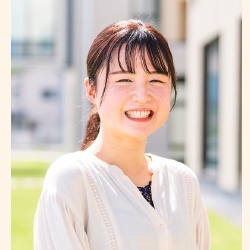
4 years (at the time of the interview)
Yuika Takahashi
Dietary frailty prevention for elderly people in the community
I chose Professor Inayama's seminar because I wanted to deepen my understanding of nutritional management for the elderly. The theme is "Nutritional and dietary support aimed at preventing frailty in elderly people living in the community." Frailty refers to a state in which physical, mental, lifestyle, and social functions decline in a complex manner. The elderly are at high risk of a rapid decline in health and physical function, and we are researching how to support them from a nutritional and dietary perspective. First, we discussed what kind of support is necessary based on previous research. Next, we planned nutrition education according to the nutrition management cycle.
Currently, we are refining our plan in discussions with the facilities that are cooperating with us. We are putting what we learned in class into practice, such as creating flyers to recruit participants for nutrition education based on the nudge theory of behavioral economics, and developing educational programs that utilize behavioral science theories. Through my graduation research, I feel confident that I can become a registered dietitian who can provide nutrition and dietary support for frailty prevention based on theory.
I chose Professor Inayama's seminar because I wanted to deepen my understanding of nutritional management for the elderly. The theme is "Nutritional and dietary support aimed at preventing frailty in elderly people living in the community." Frailty refers to a state in which physical, mental, lifestyle, and social functions decline in a complex manner. The elderly are at high risk of a rapid decline in health and physical function, and we are researching how to support them from a nutritional and dietary perspective. First, we discussed what kind of support is necessary based on previous research. Next, we planned nutrition education according to the nutrition management cycle.
Currently, we are refining our plan in discussions with the facilities that are cooperating with us. We are putting what we learned in class into practice, such as creating flyers to recruit participants for nutrition education based on the nudge theory of behavioral economics, and developing educational programs that utilize behavioral science theories. Through my graduation research, I feel confident that I can become a registered dietitian who can provide nutrition and dietary support for frailty prevention based on theory.