Public Management Course
We cultivate new leaders with a global perspective, who are needed in local governments and industries aiming for regional revitalization.
We cultivate a broad range of learning and the ability to solve real-world problems, providing knowledge of public management such as administrative organizations and local government systems, and developing planning and practical skills to solve regional issues. Graduates find employment in administrative agencies such as the national government, prefectures, and municipalities, as well as public organizations and private companies with a high degree of public service.
We cultivate a broad range of learning and the ability to solve real-world problems, providing knowledge of public management such as administrative organizations and local government systems, and developing planning and practical skills to solve regional issues. Graduates find employment in administrative agencies such as the national government, prefectures, and municipalities, as well as public organizations and private companies with a high degree of public service.
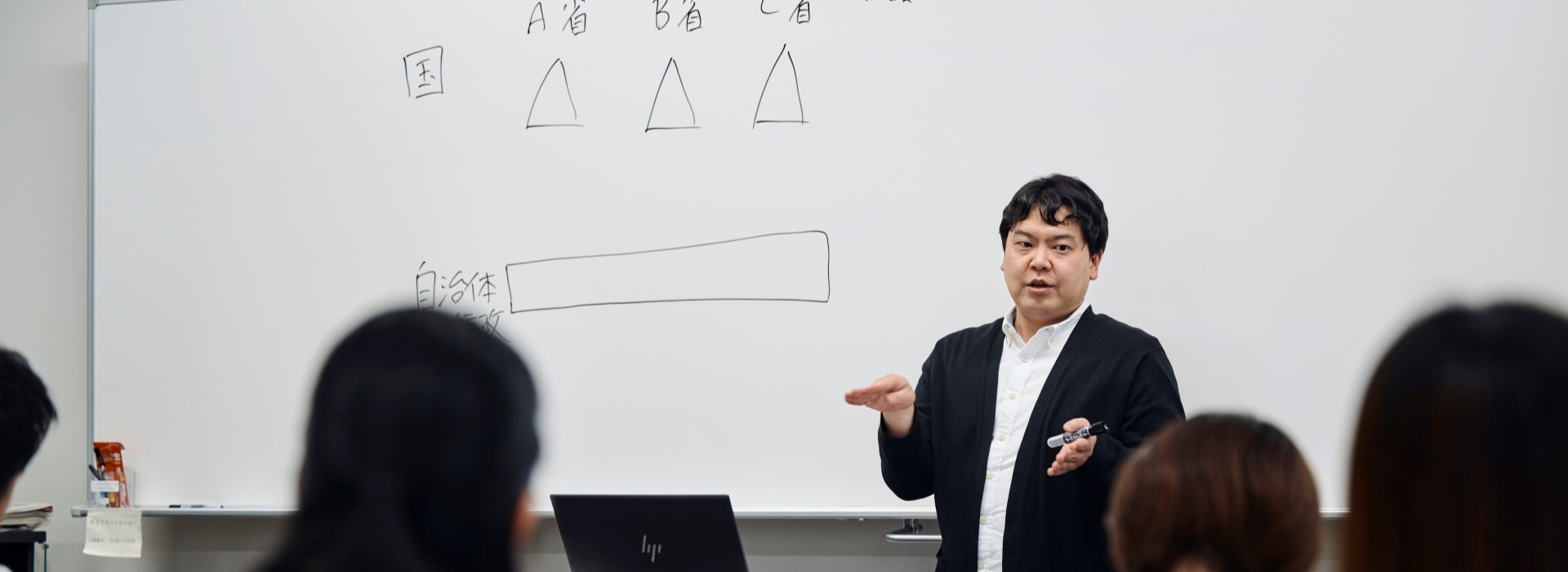
Skills you will acquire in four years
1. Planning and implementation skills
Our faculty, specializing in fields such as law, political science, public administration, public finance, policy studies, and sociology, provides interdisciplinary learning necessary for public management.
By acquiring techniques for solving the increasingly diverse and complex challenges of local communities, and by cultivating the knowledge and abilities to approach solutions from both theoretical and practical perspectives, you can hone your planning and practical skills.
By acquiring techniques for solving the increasingly diverse and complex challenges of local communities, and by cultivating the knowledge and abilities to approach solutions from both theoretical and practical perspectives, you can hone your planning and practical skills.
2. The ability to manage value creation
The issues that must be considered on a global scale are also local issues.
Solving this problem requires collaboration not only from the government and local authorities, but also from corporations and NPOs. At our university, we are exploring ways to manage the creation of regional value through such collaboration from a "global" perspective, aiming to put into practice the principle of "Think globally, Act locally."
Solving this problem requires collaboration not only from the government and local authorities, but also from corporations and NPOs. At our university, we are exploring ways to manage the creation of regional value through such collaboration from a "global" perspective, aiming to put into practice the principle of "Think globally, Act locally."
Student Interviews
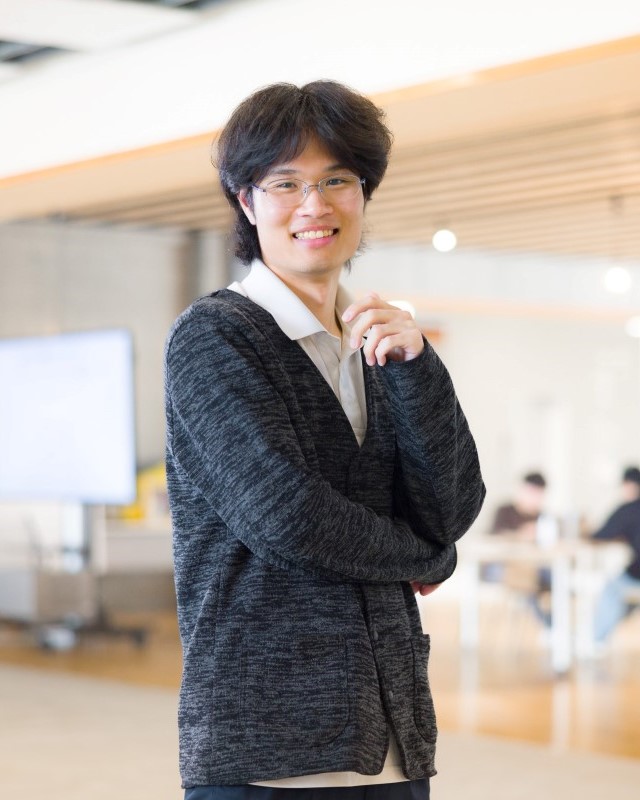
Third-year student Public Management Course (at the time of the interview)
Osaki Ryuga
I want to deepen my understanding of law while studying public administration.
My parents used to live in Nagano Prefecture, so I've always been interested in the prefecture. I've always had an entrepreneurial spirit, and I wanted to learn a variety of things at a newly established university, and study fields that I thought would be difficult to learn on my own, so I chose The University of Nagano.
If it's a field I'm interested in, I find every lecture fascinating. All the professors in Public Management Course are very passionate about their respective fields of expertise. I am learning a great deal. I am particularly interested in law and would like to learn more about it and develop a legal mindset.
I'm also interested in studying abroad. Learning about different cultures through Overseas Program and other experiences is undoubtedly important, as it helps us realize that what we take for granted is not always the case. That's what I feel.
If it's a field I'm interested in, I find every lecture fascinating. All the professors in Public Management Course are very passionate about their respective fields of expertise. I am learning a great deal. I am particularly interested in law and would like to learn more about it and develop a legal mindset.
I'm also interested in studying abroad. Learning about different cultures through Overseas Program and other experiences is undoubtedly important, as it helps us realize that what we take for granted is not always the case. That's what I feel.
Research & Seminar Introduction
My research focuses on local government and public policy, as well as other matters related to local areas.
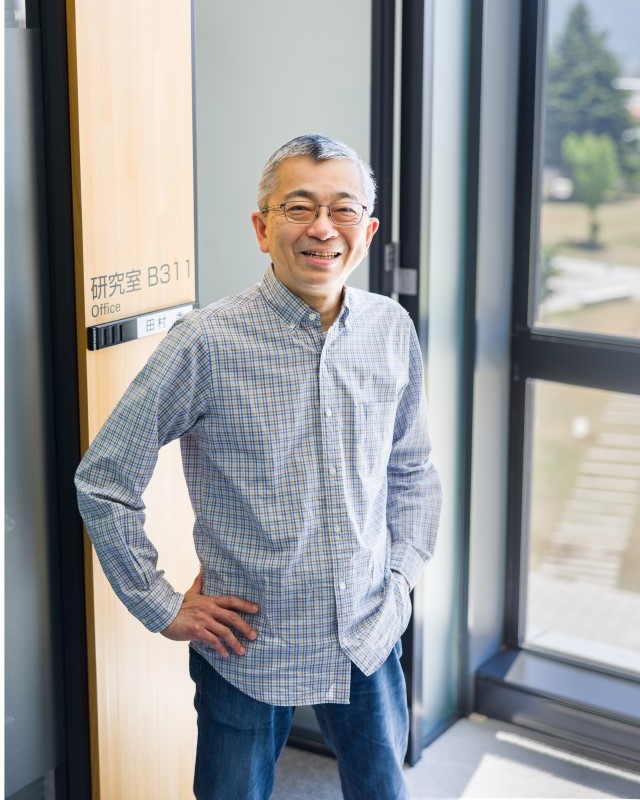
Professor Tamura Shigeru
Specialization: Public Administration, Local Government, Public Policy
My main research areas are local government and public policy. My field of study is broad, and I am interested in various aspects of regional affairs. I research anything that interests me, from administration and urban development to transportation, libraries, landscapes, educational institutions, and even local cuisine.
I guide my students not only to rely on superficial information they can find online, but also to investigate and think for themselves about what is actually happening in their communities, so that they can become individuals who can contribute to solving problems in their local areas. With regional revitalization as my main theme, I also serve as a policy advisor for several municipalities, including Ueda City and Minakami Town in Gunma Prefecture, and I operate with a motto of being hands-on. To date, I have authored 24 books, co-authored 12 books, and have made numerous television appearances and written for newspapers and magazines.
What is the Tamura Seminar?
Our motto is "Learn well, learn well," and we value a hands-on approach in our seminars.
We value student autonomy, allowing them to choose their own themes and regions, engage in discussions with each other, conduct fieldwork, and present their findings. Our seminar students participated in the Public Policy Forum, a student policy competition organized by the Japan Public Policy Association, held in Ueda City, and won both the Japan Public Policy Association Special Award and the University President's Special Award.
I guide my students not only to rely on superficial information they can find online, but also to investigate and think for themselves about what is actually happening in their communities, so that they can become individuals who can contribute to solving problems in their local areas. With regional revitalization as my main theme, I also serve as a policy advisor for several municipalities, including Ueda City and Minakami Town in Gunma Prefecture, and I operate with a motto of being hands-on. To date, I have authored 24 books, co-authored 12 books, and have made numerous television appearances and written for newspapers and magazines.
What is the Tamura Seminar?
Our motto is "Learn well, learn well," and we value a hands-on approach in our seminars.
We value student autonomy, allowing them to choose their own themes and regions, engage in discussions with each other, conduct fieldwork, and present their findings. Our seminar students participated in the Public Policy Forum, a student policy competition organized by the Japan Public Policy Association, held in Ueda City, and won both the Japan Public Policy Association Special Award and the University President's Special Award.
The lingering influence of German public law from the era of constitutional monarchy remains under the Japanese Constitution.
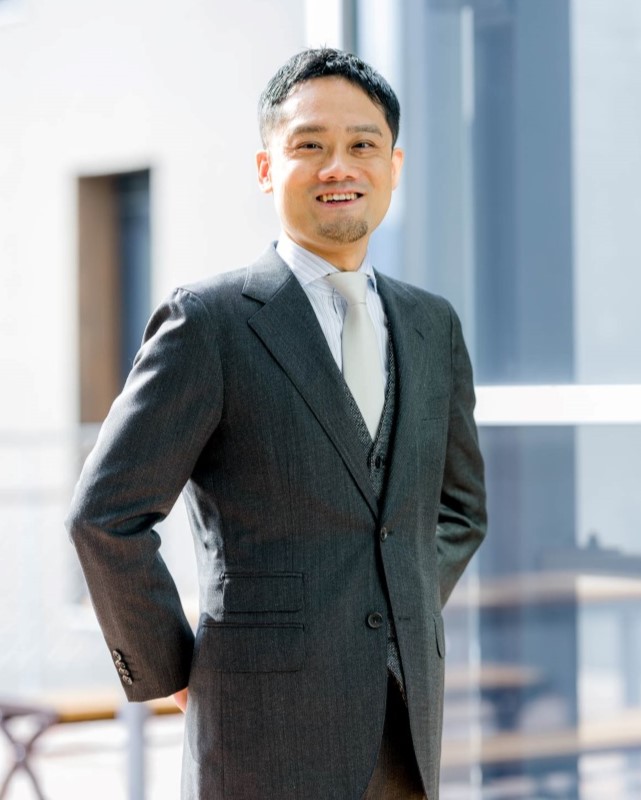
Lecturer Naito Akira
Specialization: Public Law
My research focuses on the legal theory of German public law during the constitutional monarchy era, which served as a model for constitutional and administrative law in Japan from its inception and continues to influence us today.
These issues have been attempted to overcome or transcend for decades since the enforcement of the Japanese Constitution, and many have been achieved. However, remnants of them still persist in practice and academic discourse. Why is it so difficult to completely overcome them? These are issues that have been criticized throughout the postwar period and continue to exist even in the modern era of democracy and popular sovereignty. My research is driven by a desire to calmly consider and explore the source of their tenacity and vitality.
What is the Naito Seminar?
Public enterprises require a legal basis for their operation.
In this seminar, while studying the core subjects of constitutional and administrative law, students will develop the ability to think logically about various events that arise in their relationships with others. The goal of this seminar is for students to be able to understand legal documents and concepts, including court judgments, and ultimately to be able to apply them through the writing of their graduation thesis.
These issues have been attempted to overcome or transcend for decades since the enforcement of the Japanese Constitution, and many have been achieved. However, remnants of them still persist in practice and academic discourse. Why is it so difficult to completely overcome them? These are issues that have been criticized throughout the postwar period and continue to exist even in the modern era of democracy and popular sovereignty. My research is driven by a desire to calmly consider and explore the source of their tenacity and vitality.
What is the Naito Seminar?
Public enterprises require a legal basis for their operation.
In this seminar, while studying the core subjects of constitutional and administrative law, students will develop the ability to think logically about various events that arise in their relationships with others. The goal of this seminar is for students to be able to understand legal documents and concepts, including court judgments, and ultimately to be able to apply them through the writing of their graduation thesis.
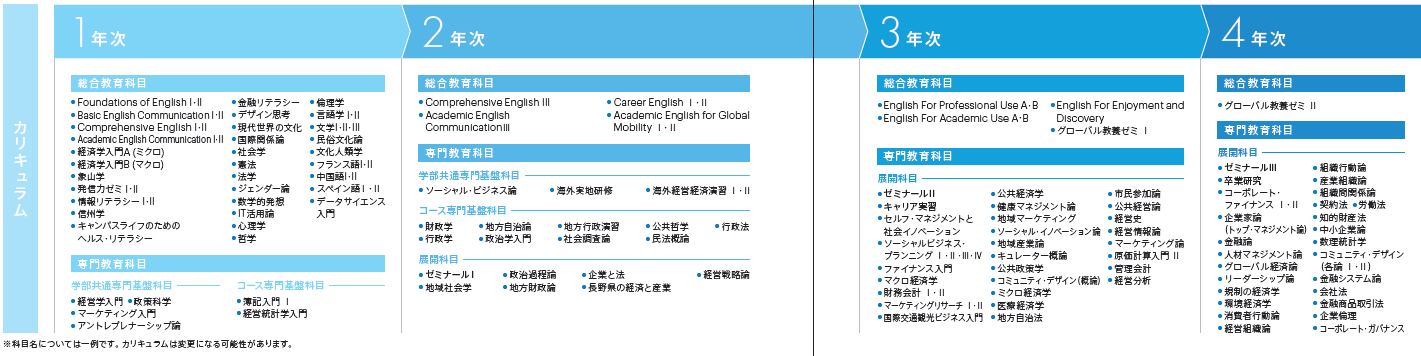
Click to enlarge.