Communication Seminar
Throughout the year, you learn and discover what you truly want to do.
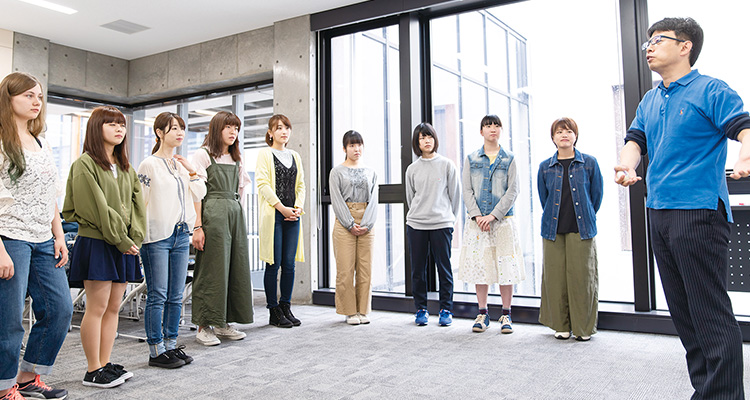
In Communication Seminar which all first-year students take, the main theme is "communicating with others," and each student actively hones their ability to communicate. Starting with questions that encourage self-awareness, such as "What do I want to do?", students acquire skills for proactive learning at university, develop their independent thinking skills in areas of interest, broaden their perspectives, and develop the ability to influence and communicate with others.
Acquisition of academic skills that form the foundation of four years of learning.
The seminar is held once a week throughout the year. It is divided into two halves: the first half and the second half.
In the first half of the program, students will learn essential self-care skills for university life through mental health courses, career courses to plan their four years with a clear vision of their future, information retrieval courses, and academic skills necessary for university studies (such as report writing).
In the first half of the program, students will learn essential self-care skills for university life through mental health courses, career courses to plan their four years with a clear vision of their future, information retrieval courses, and academic skills necessary for university studies (such as report writing).
[Student Support Center]
Mental Health Course
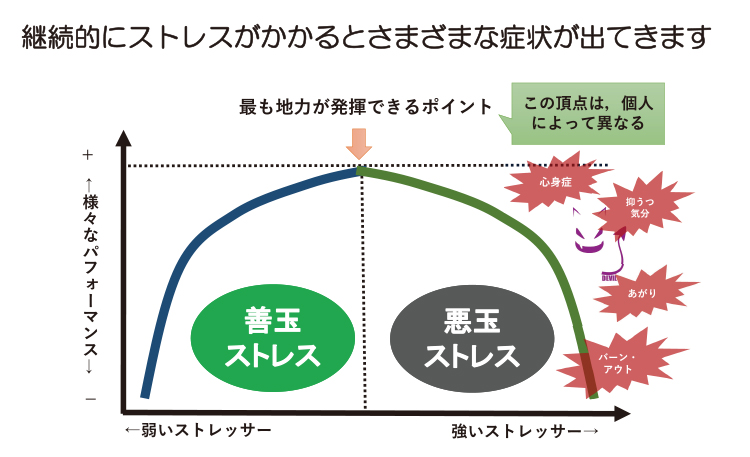
University life is a time filled with worries and requires self-management, so we will learn about the characteristics of university life that help maintain mental health, signs of physical and mental distress, and resources for counseling.
Mental Health Course
University life is a time filled with worries and requires self-management, so we will learn about the characteristics of university life that help maintain mental health, signs of physical and mental distress, and resources for counseling.
[Career Center]
Career Course
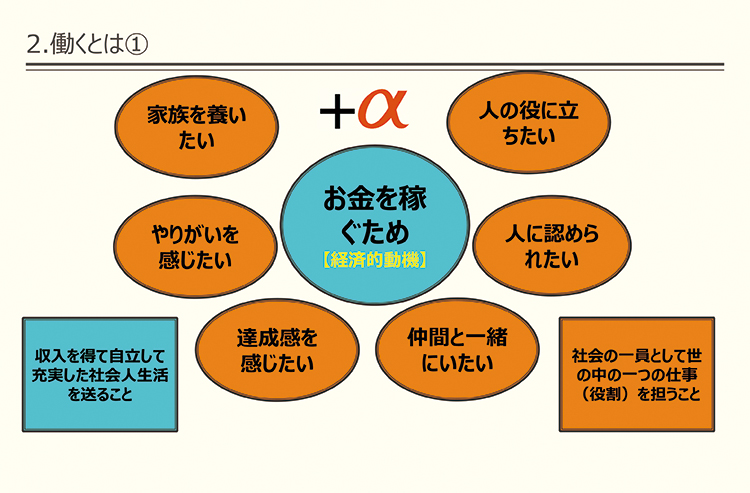
Through workshops, participants will learn how to boost their motivation, set future goals, and acquire the fundamental skills and interpersonal abilities necessary for university and professional life.
Career Course
Through workshops, participants will learn how to boost their motivation, set future goals, and acquire the fundamental skills and interpersonal abilities necessary for university and professional life.
【library】
Information Retrieval Guidance
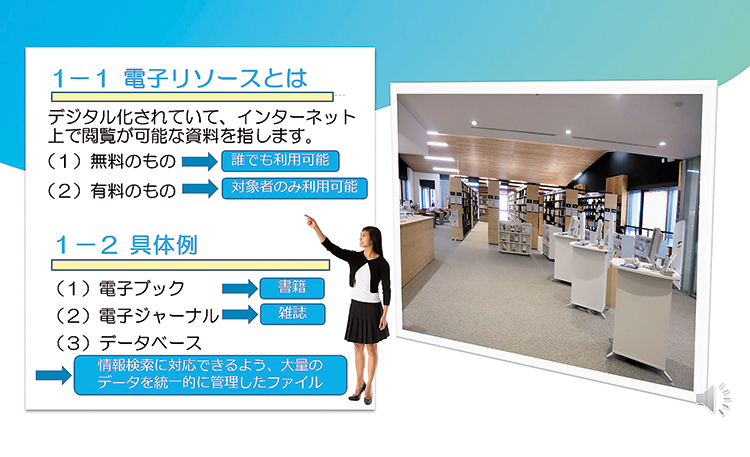
Writing reports and papers requires referencing numerous sources. This course teaches you the skills needed to search for and obtain the necessary research materials.
Information Retrieval Guidance
Writing reports and papers requires referencing numerous sources. This course teaches you the skills needed to search for and obtain the necessary research materials.
Learning across faculties and departments, in small groups, proactively and interactively.
University learning demands an increasingly proactive attitude. Essential skills for this include note-taking, reading, report writing, and presentation skills—these are academic skills. Learning takes place not just through lectures, but also through practical exercises and discussions.
In the second half of the program, classes will be reorganized across faculties and departments. Each class will consist of 15 small classes of around 16 students. The themes for enhancing communication skills will vary from class to class, and students will choose classes taught by professors who interest them. For example, in a class taught by a professor specializing in Chinese culture, students may study classical Chinese poetry and modern poetry, and then research catchphrases in the modern advertising industry. In a class taught by a professor specializing in Japanese literature, students will conduct fieldwork in a castle town and think about revitalizing the town while engaging in dialogue with local people. In a class taught by a professor specializing in business administration, students will research traditional industries in the prefecture, including lacquerware, and brainstorm ways to revitalize them. In a class taught by a professor specializing in philosophy, students will actually hold philosophy cafes on campus or in town in groups.
At the end of the second half, participants will present their individual or group research, reflecting on the past year. Throughout the program, the aim is for each participant to learn proactively, deepen their understanding of the topic through dialogue, grow as an individual, and develop the ability to communicate with others.
In the second half of the program, classes will be reorganized across faculties and departments. Each class will consist of 15 small classes of around 16 students. The themes for enhancing communication skills will vary from class to class, and students will choose classes taught by professors who interest them. For example, in a class taught by a professor specializing in Chinese culture, students may study classical Chinese poetry and modern poetry, and then research catchphrases in the modern advertising industry. In a class taught by a professor specializing in Japanese literature, students will conduct fieldwork in a castle town and think about revitalizing the town while engaging in dialogue with local people. In a class taught by a professor specializing in business administration, students will research traditional industries in the prefecture, including lacquerware, and brainstorm ways to revitalize them. In a class taught by a professor specializing in philosophy, students will actually hold philosophy cafes on campus or in town in groups.
At the end of the second half, participants will present their individual or group research, reflecting on the past year. Throughout the program, the aim is for each participant to learn proactively, deepen their understanding of the topic through dialogue, grow as an individual, and develop the ability to communicate with others.
| [Past Themes] | |||
| Traditional Industries Survey | Investigate industries | Develop your improvisation skills | Thinking about natural disasters |
| Let's think about poetry! | I'm going to try running a philosophy café. | Attempting theatrical communication | Considering the synergistic effects between professional sports teams and local governments. |
| Let's hone our computational thinking skills! | Thinking about the local economy in a relaxed and moderate way. | Thinking about the future of urban development | Examining news from Nagano Prefecture |
| Thinking objectively about the mundane things of everyday life | Let's create our own original brand! | Promoting the charm of castle towns in Nagano Prefecture | |
I hope they will develop the ability to act driven by intellectual curiosity.
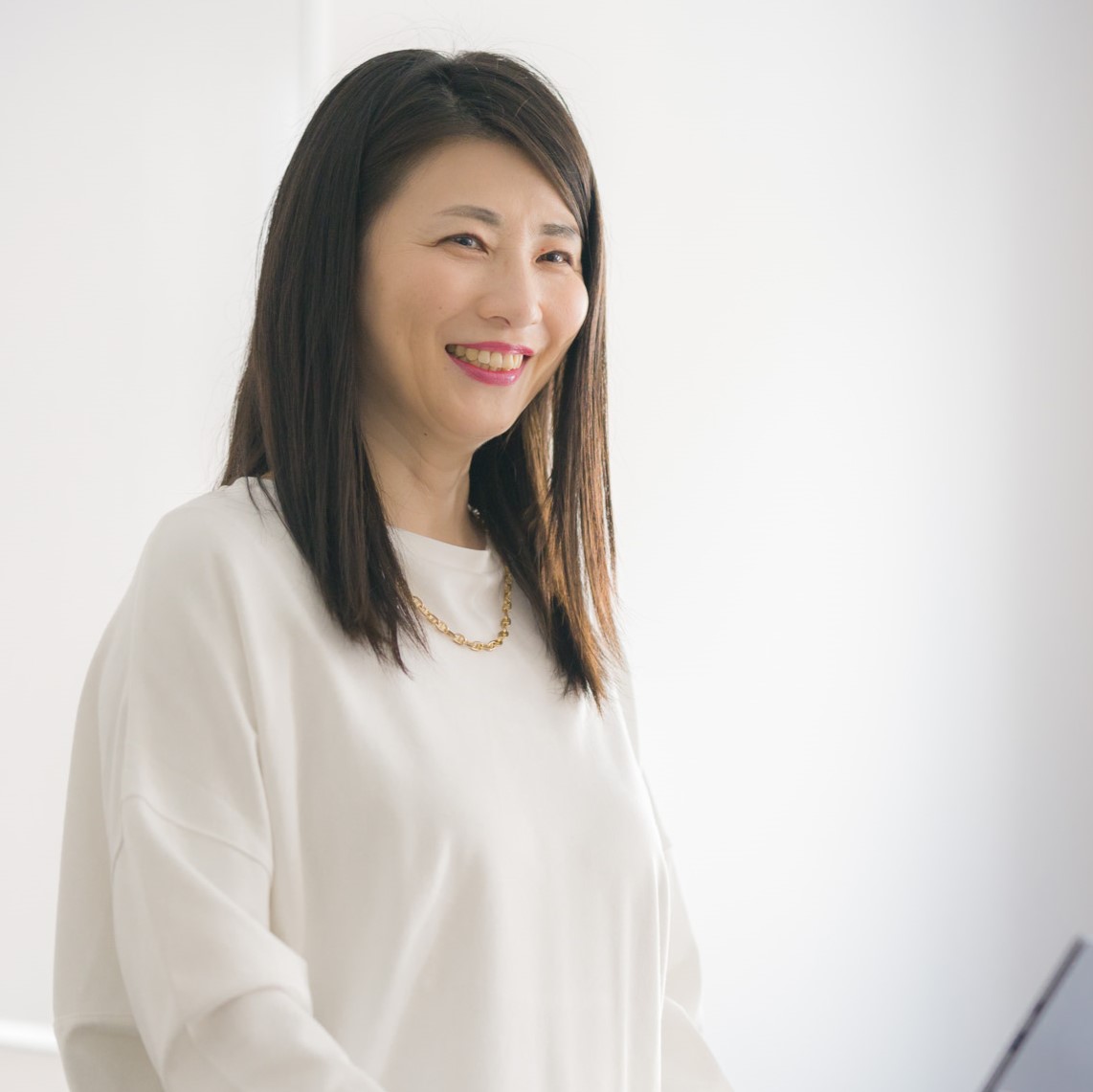
Professor Nihonmatsu Yasuko
Unlike the knowledge-absorbing learning of high school, university requires students to proactively seek out questions, gather information and knowledge, output that information through writing and presentations, and further engage in discussion and examination. As a prelude to this, the "Communication Seminar" helps students acquire fundamental academic skills, engage in small group work across faculties and departments, and learn outside the university on a given theme, thereby acquiring new skills.
The theme of my "Communication Seminar II" class is "Promoting the Castle Culture of Nagano Prefecture." We are focusing on castles in the prefecture that are not well known today. We will research castles that were once historically important and learn how to promote them as regional resources. In the "Global Liberal Arts Seminar" for third and fourth-year students, we are working on a project to unearth and research hidden cultural resources in the prefecture and assign them value. Through history and culture, students will acquire methods to deepen their understanding of the region and cultivate a broad perspective that can be applied to their specialized field of study.
Unlike the knowledge-absorbing learning of high school, university requires students to proactively seek out questions, gather information and knowledge, output that information through writing and presentations, and further engage in discussion and examination. As a prelude to this, the "Communication Seminar" helps students acquire fundamental academic skills, engage in small group work across faculties and departments, and learn outside the university on a given theme, thereby acquiring new skills.
The theme of my "Communication Seminar II" class is "Promoting the Castle Culture of Nagano Prefecture." We are focusing on castles in the prefecture that are not well known today. We will research castles that were once historically important and learn how to promote them as regional resources. In the "Global Liberal Arts Seminar" for third and fourth-year students, we are working on a project to unearth and research hidden cultural resources in the prefecture and assign them value. Through history and culture, students will acquire methods to deepen their understanding of the region and cultivate a broad perspective that can be applied to their specialized field of study.
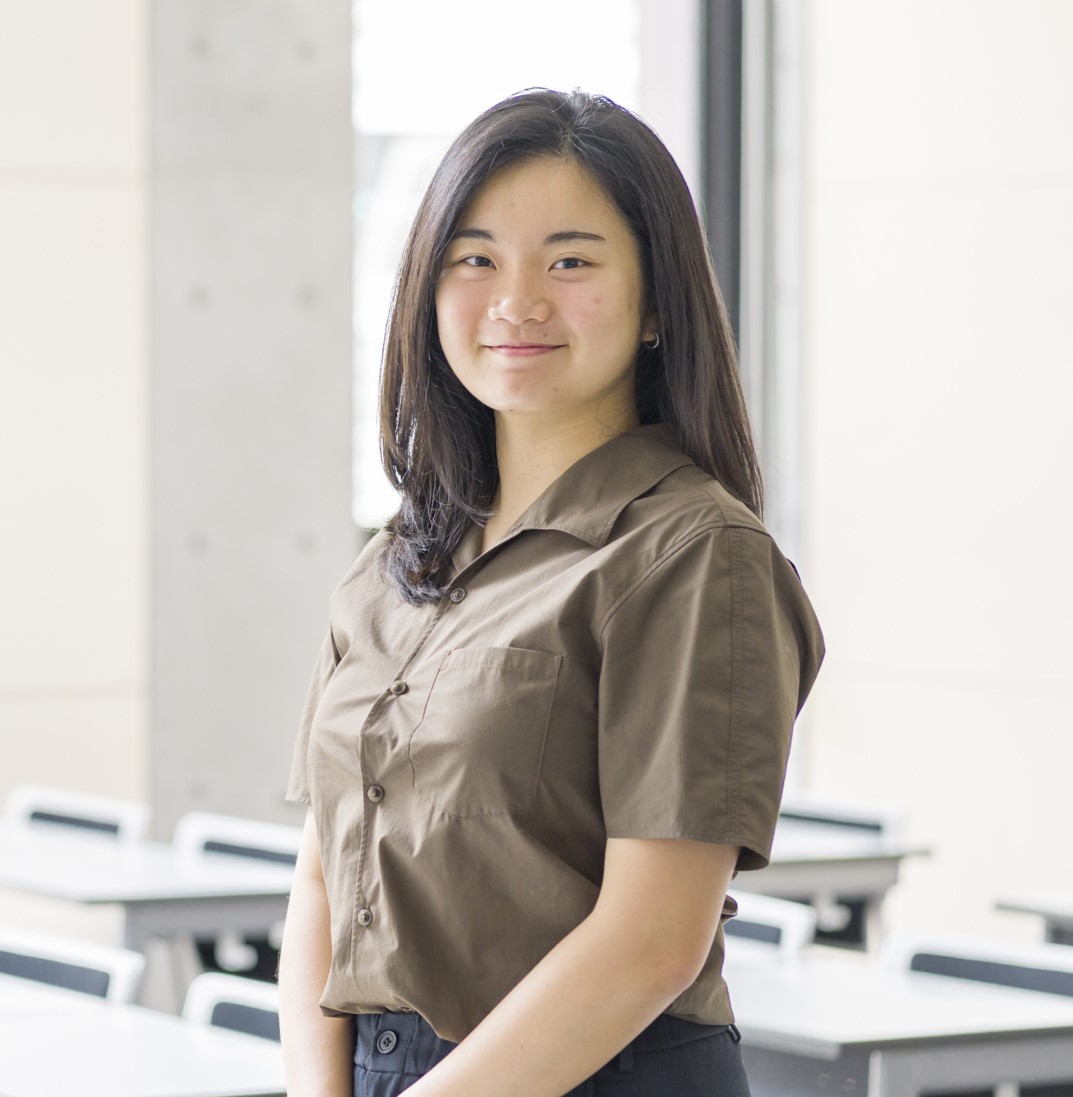
Third year Department of Global Management Studies
GOI SHINYUAN
The "Global Liberal Arts Seminar" I took, taught by Professor Yasuko Nihonmatsu, focused on "Literary Works and Local Legends Related to the Battle of Kawanakajima in the Sengoku Period." Our research deepened our understanding of literature and legends as local culture, and the results of our investigations have led to a wide range of activities, including the production of videos showcasing the region's attractions, the management of related events, and the creation of multilingual brochures. Learning local history and Japanese history in this way allows us to discover connections to the present while simultaneously experiencing past values and cultures—a truly cross-cultural experience.
GOI SHINYUAN
The "Global Liberal Arts Seminar" I took, taught by Professor Yasuko Nihonmatsu, focused on "Literary Works and Local Legends Related to the Battle of Kawanakajima in the Sengoku Period." Our research deepened our understanding of literature and legends as local culture, and the results of our investigations have led to a wide range of activities, including the production of videos showcasing the region's attractions, the management of related events, and the creation of multilingual brochures. Learning local history and Japanese history in this way allows us to discover connections to the present while simultaneously experiencing past values and cultures—a truly cross-cultural experience.